On Monday, 9 August 1886, the hoisting of a black flag at Strangeways gaol informed the excitable crowd outside the prison gates that hangman James Berry had carried out a sentence of death. However, this execution at Strangeways was unlike any of the previous fifteen. This time Berry had had a double first on his hands. The condemned was not only the first serial killer to be executed at Strangeways but also the first woman.
Her name was Mary Ann Britland and this is her story.
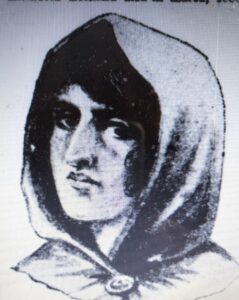
Born in Bolton in 1847, Mary was the second eldest daughter of Joseph and Hannah Hague.
When it eventually came to love, the extremely attractive Mary married for money. She set her cap on Thomas Britland, a carter by trade who, despite his fondness for alcohol, had managed to be thrifty enough to save a few pounds.
The couple rented a house in Turner Lane, Ashton-under-Lyne. Mary held down two jobs. Her main employment was as a reeler in a local mill, and in the evenings, she earned extra working part time as a barmaid.
Though she gave birth to two daughters, Elizabeth Hannah and Susannah, the maternal instinct did not come easily to Mary. She would more sooner be out earning and spending money than looking after children.
Having worked her way through Thomas’s savings the relationship suffered. Thomas had become a heavy drinker, and by the time Mary was in her late 30s Thomas was probably too knackered to play the lover and Mary in the mood for what was then known as criminal conversation.
Just across the street at number 128 lived Thomas and Mary Dixon. Thomas was a twiner by trade. Mary was 29 years-of-age, Thomas was several years her junior. However, by 1886 their marriage had cooled. Dixon became Britland’s toyboy lover and she quickly became infatuated with him. It was easy enough for them to meet as Thomas Britland’s job was such that for much of the week it was often after 11.00pm before he was home.
Then a careless caress was witnessed by her daughter Elizabeth (19). “Mother, I saw you kissing Mr Dixon last night. I shall tell father.”
“You little devil!” replied Britland “You will never live to do it!”
Allegedly Britland then asked several women friends that if a person died of vermin killer could the doctors tell? It appears her friends had no idea though the general opinion was that such powder was untraceable.
During the evening of Monday 8 March 1886, Elizabeth was suddenly taken violently ill, vomiting, convulsions, and heart spasms. Throughout the night she did showed signs of recovery only for the symptoms to return. At around 8.00pm on 9 March, Elizabeth died.
Elizabeth’s death was treated as natural causes and Britland even collected £10 (approx. £1130 in 2025) insurance money. There was no inquest.
When Mrs Sarah Lord came to lay the Elizabeth out, she found the body unusually stiff. The hands were clenched tight, there was a black mark under Elizabeth’s left ear, the abdomen was swollen. Whilst Sarah was washing Elizabeth, Britland insisted she finish quickly.
At the time of Elizabeth’s death, Britland was temporarily out of work and had debts. Even so, on 30 April, she went to the home of the Provincial Insurance Society agent and paid the 1s 8d premium on a policy upon the life of her husband. The insured sum was £11. 17s (approx. £1339 in 2025). As this wasn’t the usual day for paying premiums, Britland was challenged by the agent, Mr Mortimer. She replied that she was going to be away on the Saturday.
On the morning of Monday 3 May, Thomas Britland died. He had been so violently ill that he couldn’t get out of bed a go to work. Mary Ann Britland had been in constant attendance eagerly preparing and feeding him gruel. Thomas begged Mary Ann to fetch a doctor.
She was in no hurry. When she eventually returned Thomas was still alive. The doctor misdiagnosed and said “He is suffering from gastritis (inflammation of the stomach). The doctor then uttered what for Thomas would be fatal words “Give him a little cool broth now and then.”
Carrying out the doctor’s words to the letter, Mary Ann administered a little cool broth now and then. After four hours of writhing in agony Thomas Britland too was dead.
Again, there was no inquest. Thomas Britland’s death was attributed to epilepsy and Mary Ann collected the insurance money.
Immediately following Thomas’s death, Britland moved in with the Dixons even though she continued to pay rent on her own house. Though Thomas Dixon might well have been enjoying a bit of rough ‘n’ tumble with Mary Ann, there is no evidence he wanted to leave his wife.
On Thursday 13 May, Britland and the Dixons had tea together. Afterwards Britland went home accompanied by Mary Dixon. The pair returned around bedtime. At around 11.30pm Mary Dixon was struck with severe abdominal pain. She died at around 6.00am the following morning. That same day and his wife hardly cold, Thomas Dixon collected £19.17.6d (approx. £2260 in 2025) insurance money.
Again, Britland was careless with her words. She was overheard by a medical student asking women friends “Can the doctors tell if a person dies of vermin poison?”
The medical student happened to have an interest in crime and decided to do a little digging. He found that Elizabeth Britland, Thomas Britland and Mary Dixon had all died suddenly and in agony within three months of one another. In all three cases the unifying link was Mary Britland. He informed the police.
On the morning of 15 May, when John Henry Law arrived to discuss catering arrangements for the funeral, Chief Constable Dalgleish, Inspector Snell and another were at the house. When the officers went outside, Britland became talkative but more of that later in the section covering the trial.
Monday 17 May. The Inquest.
The inquest into Mary’s death was held at Ashton on Monday 17 May. The doctor’s certificate recorded the cause of death as being due to abdominal spasms. However, the police had already advised the coroner, Mr F Price, of their concerns and that Dr Hamilton had carried out a postmortem on the 15th.
In his evidence to the inquest, Dr Hamilton confirmed there was no disease in any of Mary’s organs that would account for the manner of her death. He also reported that he had not examined the stomach and upper intestines, but these had been sent the Manchester city analysist.
The revelation of the inquest came from William Kilvington. He stated that Mary Ann Britland had purchased two vermin powders at his shop on 28 April. She told him she wanted to kill mice (Vermin powders contained around 1.91 grains of strychnine and 3.72 grains of arsenic).
When summing up, Mr Price implied that three sudden deaths following each other, and Britland’s careless talk about vermin powders had raised strong suspicions in the minds of neighbours. Before adjourning the inquest until 2 June, Mr Price remarked that it was desirable that the contents of the stomach and intestines be examined.
Wednesday 26 May.
On Tuesday 25 May, Britland was taken into custody. The following day she appeared at Ashton Borough Police Court charged with wilfully murdering Mary Dixon by administering poison.
Chief Constable Dalgleish told the magistrates that Britland had been taken into custody and that analysis of the contents of Mary Dixon’s stomach found traces of strychnine and that it was the cause of death.
Lewis Wolfenden, Mary Dixon’s father, told the court that before being suddenly taken ill, his daughter was well and hearty. At about 12 pm on the night of the 13th, Wolfenden heard his daughter moaning in her bedroom. He went in and asked her what the matter was. She replied that she felt very poorly. Wolfenden stated that Britland was asleep in the next room. He also said that in the early hours Dr Thompson, a homoeopathist, was sent for.
Though the doctor left some medicine, Wolfenden said his daughter died at about 6.00am.
The next to give evidence was William Kilvington, druggist. He stated that on 28 April, Britland had purchased two packets of vermin killer and had signed the poisons register as did a young woman who was with her.
Mr Kilvington recalled that the word poison was printed on the envelopes in which the packets were enclosed. When asked by the magistrates Mr Kilvington could not say how much active ingredient was in the packets.
William Henry Greenhalgh, assistant to Mr J C Hurst, druggist, stated that the prisoner had come to Mr Hurst’s shop on 3 May and purchased a packet of vermin killer.
Chief Constable Dalgleish said that upon the evidence to hand Britland should be remanded.
The Court Clerk asked, “Do you undertake to satisfy the magistrates that strychnine has been found in the stomach?”
“Yes” replied Dalgleish.
The Clerk then asked, “And you are able to prove there is strychnine in the vermin killer?”
“Yes” replied Dalgleish.
The magistrates then remanded Britland for one week. Mr F W Bromley who was appearing for the defence, asked for bail. It was refused.
A Manchester Courier journalist added ‘The case is causing great excitement in the town, and it is alleged the prisoner poisoned her daughter and husband who died in similar sudden manner as Mrs Dixon (Manchester Courier, Wednesday 26 May).
16 June.
At the hearing of 16 June, Chief Constable Dalgleish informed the bench (Mr J Fletcher and Mr J Unwin) that by an order from the Home Secretary the bodies of Elizabeth Hannah Britland and Thomas Britland, had been exhumed and the contents of the deceased stomachs had been sent to Mr Estcourt the Manchester city analysist.
As the Ashton police were still awaiting both the results of Mr Estcourt’s analysis and additional information on Mary Dixon’s death, Dalgleish was granted a further remand request.
Thomas Dixon gets his collar felt.
On Saturday 3 July, the Manchester Evening News reported that Thomas Dixon had been arrested the previous day. The same afternoon he had been brought before Mr John Fletcher at Ashton Borough Police Court.
Dixon was charged “That he did feloniously aid and abet, counsel, and procure Mary Ann Britland to commit the crime of poisoning Mary Dixon, his wife.”
Mr Broadbent, solicitor, was at the court appearing on behalf of the Solicitor to the Treasury. Broadbent stated that Thomas Dixon be charged with being an accomplice in the murder before and after the fact, and that Dixon be held on remand until the following Tuesday when it was anticipated both Dixon and Britland would be charged. Broadbent’s request was backed by Inspector Snell who said that since the coroner’s inquest he had such received information that he believed Dixon was an accessory to the murder.
The hapless Dixon asked to be granted bail. It was refused.
By the time Britland was committed for trial the case against Thomas Dixon had been dropped.
On 9 July, as Britland she was being taken under escort from Strangeways to Ashton police station, she learned of Dixon’s release without charge. To say Britland went ballistic might be something of an understatement. She ranted at Sergeant Joseph Nightgale “He (Dixon) had no business to be set off, and he won’t if I can speak my mind! He ought to be shut up all the time the same as me. It was he who made me do it!” Sergeant Nightingale duly noted the outburst in his notebook.
Manchester Assizes, Thursday 22 & Friday 23 July.
The first business of the day before Mr Justice Cave, was the resumption of the trial of Adolph Bender (30). Bender passing himself off as the owner of a large musical instrument business, had obtained instruments from Johann Kiessling in Saxony, and Karrer & Wohmlich in Switzerland. In fact, he had a small shop on Upper Brook Street. Once the instruments arrived, Bender took them to Liverpool where he pawned them. Adolphus was given six months hard labour.
Sir Lewis William Cave had a reputation for being bluff and concise. He had no hesitation in cutting short any legal argument he considered lengthy. Also, it was well known that after his claret flued lunch, Mr Justice Case often took an afternoon snooze. A snooze from which he was often awoken when ‘Flippant young barristers dropped heavy volumes on the floor or banged the flap of the seat’ (Alexander Gilchrist, After Court Hours, p 183). In 1881 his knighthood and appointment as a QC had been met with surprise amongst our learned friends.
After Bender had been sent down, the court became the setting for the trial of the Assize.
Mary And Britland, indicted for the wilful murder of her daughter, her husband, and Mary Dixon. The indictment to be taken first was the murder of Mary Dixon. Britland’s trial would last two days.
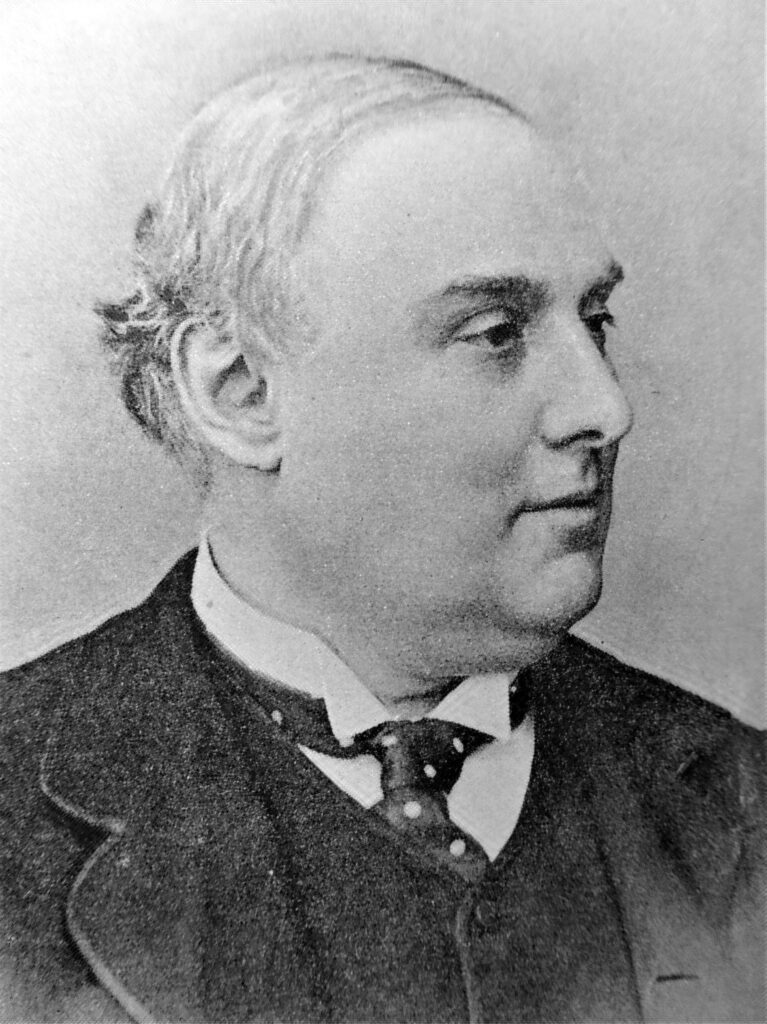
The prosecution in Regina vs Britland was led by Mr John Edward Wentworth Addison QC MP. Born in Bruges, Belgium, in November 1838. At the recent general election in which the Conservatives achieved a landslide over the Liberals, he had been elected the honourable member for Ashton-under-Lyne by just one vote. He was assisted by Mr Woodward.
For the defence there was Mr Blair and Mr Byrne.
Opening for the prosecution Addison presented a detailed summary of Britland’s infatuation with Thomas Dixon, insurance money, the purchasing of vermin poisons, and events surrounding the deaths of Elizabeth and Thomas Britland as well as that of Mary Dixon.
The Crown had a long list of witnesses, ranging from Susannah Britland, Mary Ann Dixon (the stepmother of Thomas Dixon), neighbours, and work colleagues, as well as Dr Alexander Hamilton, Inspector Snell, insurance agents, a professor of pathology, an analytical chemist, high street druggists, and even a mouse powder manufacturer.
The following are a representative sample:
Charles Greenhalgh, Cotton Street, Ashton-under-Lyne, stated that he had seen the accused on the evening of either Saturday 6th of 13th February at Ashton railway station. He had asked Britland where she was going and she’d said to see her daughter Susannah (18), who was in service in Oldham. Greenhalgh thought to himself that it a strange time of day to be going to Oldham. However, when the train was about to depart, Britland and Thomas Dixon came out of the waiting room and got in the last carriage. They got out at Bottom-o’-th’-Moor.
William Davies, a mechanic, and boyfriend of Elizabeth Britland said that he went to the Britland’s house in Turner Lane twice a week and Thomas Dixon was always there and still there when the witness left at around 9.00pm. William also stated that when he was with Elizabeth on the evening of 8 March, she was well.
The evidence of witness John Henry Law, the keeper of a coffee house is revealing. He had been invited round on the 15th to discuss the refreshments for the funeral of Mary Dixon. On arrival he found Chief Constable Dalgleish, Inspector Snell, and another at the house. Once the police had gone outside, Britland told him that a postmortem was to be held that afternoon. She than got talkative.
She asked him if he’d seen anyone poisoned. Law said he had seen a man who’d taken mouse powder and that the body had swelled and turned black. “Mary is not swelled,” replied Britland. Law than said perhaps Mary had not had a full dose. “Can they tell?” asked Britland. “Yes, if they opened her up.” Britland then asked, “Could they tell if she had had it in tea?” Law replied they could tell in whatever way.
This was the first mention of mouse powder. Law stated that Dixon then put his arms around his dead wife and said, “Oh Mary, if any person has given you poison tell me.”
The evidence of Mary Ann Dixon, stepmother of Thomas Dixon confirmed Britland’s talkative state. Mary Ann Dixon was another visitor on the 15th and was there when Dr. Alexander Hamilton performed the postmortem.
She testified that Britland came into the kitchen and, upon noticing several glass jars asked what they were for. Mary Ann told her they were for the contents of Mary Dixon’s stomach and were to be sent to the analyst. Again, Britland asked. “Why, could they tell if she had had mouse-powder?” Mary Ann replied that could tell if she had had it two years before. Again, Britland asked “Could they tell if she had had it in tea?” Mary Ann told her yes if they analysed the stomach. Britland then went on about buying mouse powders and Mary Ann in effect warned her that she would draw attention to herself.
Inspector Snell personally delivered the jars to Mr Charles Estcourt, analyst, at his home in Old Trafford. In evidence Estcourt said that upon examination of Mary Dixon’s stomach and upper intestines he discovered one-tenth of a grain of strychnine and one-thirtieth of a grain of arsenic. An experimental dose of one-hundredth of a grain of strychnine killed a mouse in under two minutes. A second mouse lasted under three hours, but symptoms included tetanic convulsions. Experiments upon two frogs ended with the pair making complete recoveries.
Whilst no strychnine was discovered in Thomas Britland’s remains analysis one-tenth of a grain of arsenic. Elizabeth Britland’s remains revealed one-twentieth of a grain of arsenic.
Estcourt also confirmed that the contents of each of packets of Hunter’s mouse powder bought by Inspector Snell contained quantities of strychnine and arsenic.
Witness Sarah Lord, who had laid out Elizabeth, was called in to do the same for Mary Dixon. Questioned by Mr Woodward, Sarah stated that she had known the deceased for about two years. When Sarah, accompanied by a Miss Shaw arrived, they found Mary Dixon lying across the bed hands clenched. The bed was wet indicating Mary Dixon had perspired profusely before death. The body became rigid as they washed it; there was discolouration around the left ear, and they were unable to prise open the hands.
Sophia Walker, widow, Caroline Street, Ashton, said Britland had sent for her at about 2.00am on 9 March. Britland told her that Elizabeth had been taken ill. Sophia thought Elizabeth had had a fit, but she was also in great pain. Sophia stayed for one hour and attempted to ease the pain.
At 6.00am Sophia saw Britland leaving 133 Turner Lane and asked how Elizabeth was. Britland said the doctor had been, but her daughter was much worse.
The next day, Sophia went to the house. Susannah Britland and Thomas Dixon were there even though he ought to have been at work. Sophia was told that the accused and Dixon were going to see about a grave.
In evidence Mr Charles Thompson, surgeon, practising at Ashton, said that on 9 March he was called to visit Elizabeth Britland. He said she looked pale and had pain to the right side of the abdomen. She was conscious all the time he was there. He prescribed (a homoeopathic medication of belladonna and colocynth) for her and left, returning about 3.00pm that afternoon after being called for. Britland told him that Elizabeth had had a fit. Elizabeth had a choking sensation in her throat and pain in the abdomen. Again, he prescribed medication.
Thompson returned at 9.00pm to find Elizabeth dead. He told the court that at no time did Elizabeth display any signs of having a fit.
James Marsden worked at Heap’s Vaults. He stated that just before 7.00am on 1 May, Britland turned up and told him Thomas Britland had ben taken ill and wouldn’t be in. At about 10.15am on 3 May, Marsden visited Thomas Britland. According to Marsden, Britland appeared to have had a fit. His hands were clenched so tight that Marsden couldn’t open them. Marsden thought the fit lasted for about three minutes.
William Kilvington, chemist and druggist, 75 Wellington Road, Ashton, gave evidence that Britland had purchased a packet of Hunter’s Mouse Poison on 28 April. After signing the poison’s book, Britland bought a second packet. On 3 July, Kilvington confirmed he sold a similar packet to Inspector Snell, Ashton Police.
John William Arden, assistant chemist. He confirmed that on 9 March, Britland had come to the shop and purchased one of Harrison’s mouse-powders.
Dr Julius Dreschfield, professor of pathology at the Victoria University, was an expert on poisons and their symptoms. When the analytical results were combined with the symptoms displayed, Thomas Britland died of strychnine poisoning and that he had received two or more doses of mouse powder. Mary Dixon had died in similar circumstances, and Elizabeth Britland had received more than one dose.
The final witness for the prosecution was Dr Harris who had been re-called. He confirmed the results of experiments he had undertaken on tea laced with strychnine. When one grain of strychnine was added to a quart (1.14litres) of sweetened tea (including milk), he found the poison could be tasted. However, he discovered that when half a grain was added to one pint (0.57of a litre) of sweetened tea, it could be taken without the intended victim knowing. Interestingly, he discovered that the taste of the strychnine was enhanced if the intended victim was eating anything.
For the defence Mr Blair said that the insurance payments Britland received were too small to be a motive, and that the prosecution had failed to establish any motive whatsoever. Blair also contended that the defendant’s acts were not those of a person who had committed such a crime.
In effect, the prosecution case was that Britland had administered poison at supper consisting of tea, pickles and bread and butter on the night of 13 May. Besides Britland and the deceased, two others were present, and all four ate the same meal (prepared by Mary Dixon) and shared the tea.
The prosecution had failed to offer evidence that Britland helped prepare the meal.
The jury retired at about 6.20pm. At 7.40pm they returned to court, the foreman announcing that they could not agree a verdict. Mr Justice Cave explained to the jury that to convict, they did not need a motive, only the certainty that she was the killer. They were then sent back to the jury room. At 10.30pm the jury was back in court still unable to agree a verdict.
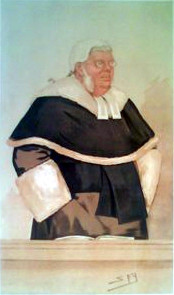
Ten minutes later, Mr Justice Cave threatened to lock the jury in for the night. In those days juries were not provided with food or drink. The jury then returned a verdict of guilty.
Mr Justice Cave donned his black cap. When sentenced Mary Ann Britland “I am innocent, I am not guilty at all.” She then broke down and was shrieking as she was taken away.
An editorial in The Echo (Saturday 24 July), mentioned that insurance policies had been taken out on each of the deceased.
“Too much reason to fear that the extension of life assurance to the poorer classes is highly beneficial, among the more degraded it entails some danger to human life.” The Echo also claimed that when Britland had purchased vermin-killer, “the shopman uttered the grim but significant jest, ‘Now, missus, administer them scientifically, not too large doses, and then you’ll secure the club money.”
The Petition.
On Saturday 31 July, the Manchester Evening News reported that a petition was underway at Ashton-Under-Lyne for the commutation of the death sentence “that the theory of the prosecution at the trial was that the prisoner administered poison to Mary Dixon at supper on the night of the 13th of May. There were present at such supper two other persons besides the prisoner and the deceased, and it was not proven in evidence at the trial that prisoner prepared or in any way assisted in the preparation of the meal or gave any food or drink to the deceased. On the other hand, the supper was prepared by deceased, and partaken of by all the persons present. That it was not proved in evidence t the trial that the prisoner had or could have had an opportunity of mixing poison with the food or drink of the said Mary Dixon, partaken of by her at such supper without being observed by the other persons present. That the jury had great difficulty in agreeing on their verdict. The twice returned to court, and stated they were unable to agree, and it was not until after four hours of deliberation, and after being informed by Mr Justice Cave that they would be locked up for the night, it being 40 minutes past ten, that a verdict of guilty was pronounced.”
The petitioners believed that reasonable doubt existed and that justice would be better served if Britland’s sentence of death was commuted to a term of imprisonment or a short term of penal servitude.
The Appeal.
During the afternoon of Monday 26 July, Britland’s mother and surviving daughter were allowed to visit. She told them that she had made a statement in writing in which she still maintained her innocence.
Britland had handed it to the chaplain the Rev John Dreaper, who in turn had given it to the prison governor Major Preston, who had then forwarded it to the Home Office for consideration by the Home Secretary.
Unfortunately for Britland, the country was in the final throws of a general election called by William Gladstone following the defeat of the Liberal Party’s Government of Ireland Bill (First Home Rule Bill). The election took nearly four weeks running from 1 to 27 July, with the Conservatives under Lord Salisbury coming to power.
Liberal Home Secretary Hugh Childers left office the day before Britland sent her letter.
Salisbury did not appoint Henry Matthews as Home Secretary until Tuesday 3 August. Two days later Britland’s execution was fixed to take place on the morning of Monday 9 August.
On the morning of Saturday 7 August, Strangeways was informed by the Home Office that Matthews could not see his way to advising Queen Victoria to intervene and that the sentence of death would be carried out as scheduled.
During her time in the condemned cell, Britland was visited by numerous relatives, and it is recorded that to some of them she made a full and free confession. When asked if she had ‘done away with’ her husband and daughter, Britland hung her head but remained silent.
An Appointment with Mr Berry.
In 1886 there wasn’t a dedicated condemned cell at Strangeways. Those due to be hanged were housed in ordinary cells. The hangings took place in an execution shed in the prison grounds.
Also, the 1847 Rule for Condemned Prisoners always required two warders in the cell with the condemned. This was mainly to prevent the unfortunate from committing suicide thereby robbing the State of retribution. Britland was under the constant supervision of two female warders.
The executioner engaged for Mary Britland was James Berry, a former police constable at Bradford. Berry was relatively new to the job having carried out his first execution on 31 March 1884.
However, he was a considerable improvement on his predecessor, Bartholomew Binns, a former Lancashire & Yorkshire Railway foreman platelayer. Binns’ career as executioner had been brief (November 1883 – March 1884) but bloody. With no formal training Binns, left a trail of drunkenness and incompetence in his wake.
Even so Berry had had his share of problems. On 23 February 1885, at Exeter Prison, the trap failed to open no less than three times during the attempted execution of James Babbacombe Lee. His sentence was commuted to life imprisonment. On 25 May 1885, it all went pear-shaped for Berry at Worcester Prison. Unknown to Berry, the condemned, Moses Shrimpton, aged 66, suffered from a weak neck and the drop was sufficient to rip open his throat exposing the windpipe. The blood flowed freely.
Berry’s last botch of the year came on 11 November, when Robert Goodale was executed at Norwich Castle for the murder of his wife Bethsheba. Goodale was a big lad 5ft 11ins (1.8034m) and weighed 16 stones (101.6kg). The rope might have been too long or Goodale had a weak neck. When the trap was sprung, Berry’s first thought was that the rope had snapped. However, at the bottom of the drop pit lay Goodale’s body and next to it his decapitated head. The scene was bad enough to become known as the Goodale Mess.
On the Sunday night Britland who had become very penitent listened to the ministrations of the prison chaplain. According to the Manchester Times (14 August), Britland took “little or no supper.” She would also have been unaware of someone taking a brief look at her through the cell door spyhole.
James Berry, provided with Britland’s height, weight and other particulars by the prison authorities had come to have a quick look at his client. Despite earlier upsets Berry was becoming a proficient executioner and was one of the first to undertake a scientific study of his craft.
The calculations were complex. Height, weight and any known physical factor of the condemned that needed to be considered. Then there was the thickness of the rope, and the length of the drop required for a clean execution.
Berry calculated Britland would require a drop of seven feet.
At around midnight Britland was heard treating her warders to snatches of the psalms. Whether or not she slept is not recorded. On the morning of her execution, she took no breakfast and became more and more distressed as her 8.00am appointment with Mr Berry drew nearer.
As the little procession set off for the execution shed Britland collapsed shouting “Oh, Lord, save me! Have mercy on me!” She was then dragged screaming to the scaffold by two female warders, her cries such that they drowned out the chaplain as he read the usual prayers.
The female warders held the unfortunate woman for the few brief seconds it took Mr Berry to secure her legs and fix the noose around her neck. The warders then stepped quickly out of the way and Berry pulled the bolt.
Mary Ann Britland died instantly, her victims did not.
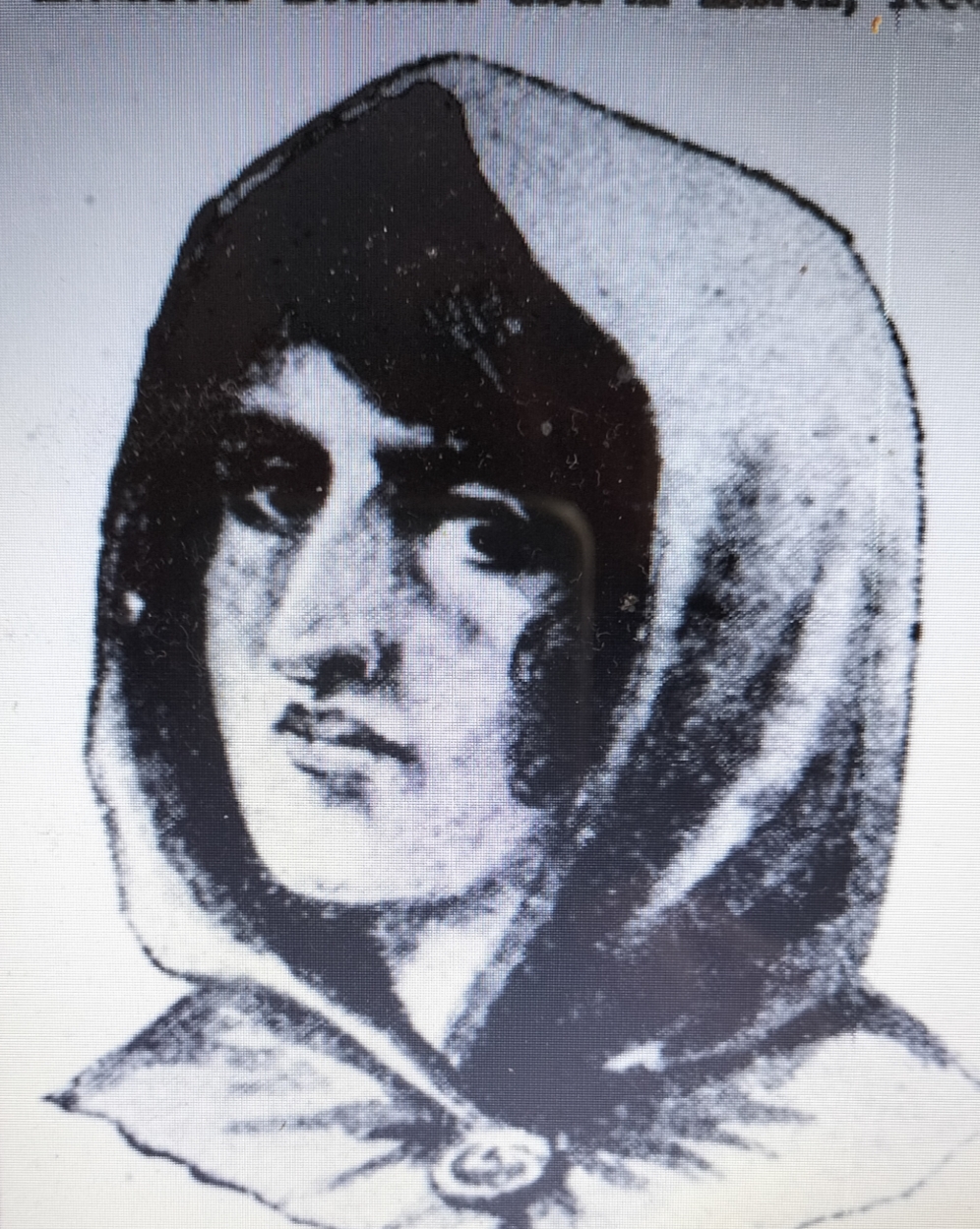
Meanwhile outside the prison gates a photographer was doing a roaring trade selling pictures of the Ashton poisoner.
Afterwards.
After hanging for one hour, Britland’s body was taken down and placed in the prison’s deadhouse to await the inquest held before deputy coroner Mr Bates.
The jury had seen the body, prison governor Major Preston gave evidence that the deceased had been convicted of the crime of murder and that the sentence of death had been carried out.
Mr C H Bradden, the prison surgeon stated that he examined Britland fifteen minutes after the execution had been carried out and that she was dead. He put the cause of death as strangulation and fracture of the neck.
The jury returned a verdict to the effect that the body was that of Mary Ann Britland and that the sentence had been carried out according to law.
A few weeks later, Chief Constable Dalgleish received a letter from James Berry. According to the Ulster Echo (Thursday 2 September), it read: “Sir – I would take it as a favour if you would send me a carte-de-visite of Mary Ann Britland, the Ashton poisoner, whom I executed at her Majesty’s prison, Strangeways, Manchester. I did hear them calling outside the prison, and I thought I should like one to put in my collection of murderers whom I have hung on different occasions. I herewith enclose you my card, trusting you will send me one, or give me the address of the photographer – I am, sir, yours faithfully, James Berry, Executioner.
According to the Ulster Echo Chief Constable Dalgleish obliged.
On 1 October, an advertisement for Lee’s Grand Museum, Picture Gallery and Waxwork was printed in the Blackpool Gazette & Herald. Church Street (nearly opposite the Post Office) was THE PLACE TO ENJOY YOURSELF admission tuppence.
The latest attractions were:
Sir Charles Drake and Mrs Crawford of the great Divorce case; Mary Ann Britland, the Ashton Poisoner; The Pimlico Mystery: the Rev George Dyson and Mrs Bartlett, and The Kirkham Tragedy: Policeman Bligh and his three victims, Lilly, Gertrude, and Nelly Bligh.
In the Saturday 22 January 1916 edition of Pearson’s Weekly, John Lawrence quoted Berry as saying Mary Ann Britland was “The worst woman I ever hanged.”

Clive is our Transport and Railway writer, with years of experience he is a fount of knowledge on all things transport nostalgia.