It is Saturday 12 December 1964. According to Met Office records the weather for England and Wales was ‘mostly cloudy with rain at times but with a few bright intervals in northern England this afternoon. Temperature will be about normal in the north but in the south it will continue to be very mild.’
And for those of us old enough to remember, the UK singles chart had some pretty good stuff in it. The Beatles were topping the chart with I Feel Fine. In second place was Gene Pitney with I’m Gonna Be Strong, whilst in third position and on its way down was that classic Blues number Little Red Rooster by The Rolling Stones.
Little Red Rooster was composed and arranged by Willie Dixon, and thanks to Brian Jones the Stone’s electric blues version is regarded as the closest to Dixon’s arrangement.
Two under valued singles on their way down were Don’t Bring Me Down by The Pretty Things and unusually for them, the Blues/American Folk song Black Girl by The Four Pennies.
However, the chart featured a new entry. At number 35 was a recording by a group recently formed in Birmingham. It was Go Now by The Moody Blues featuring the voice of Denny Laine. Go Now would go on to top the chart.
For those of you interested in what was then the Football League, it was a time when the West Midlands had four teams in the First Division. On 12 December, Birmingham City held Forest to a 1-1 home draw, Aston Villa lost 0-1 at home to Fulham, whilst West Brom managed a scrappy 1-1 draw at The Hawthorns against Manchester United. Meanwhile Wolves went down 2-1 at Stamford Bridge against one of Chelsea’s all-time great sides with their right back, the legendary Ron ‘Chopper’ Harris living up to his name.
In the Third Division, Walsall were well and truly stuffed 4-0 away at Gillingham.
Enough of the popular culture and back to the railway stuff.
The Stephenson Locomotive Society (Midland Area) had arranged a rail tour hauled by BR’s last two operational former London & North Western Railway locos. They were 0-8-0 goods engines 49361 and 49430 both of which were allocated to Bescot motive power depot. The tour proved extremely popular with society members and sufficient seats were sold to fill a nine-coach train.
The Farewell to London & North Western Locomotives Tour would run from Bescot to Hall End Sidings via Great Barr, Soho East Junction, Birmingham New Street, Aston, Perry Barr, Tipton, Wednesbury, Walsall, Aldridge, Water Orton West Junction, and Kingsbury Station Junction.
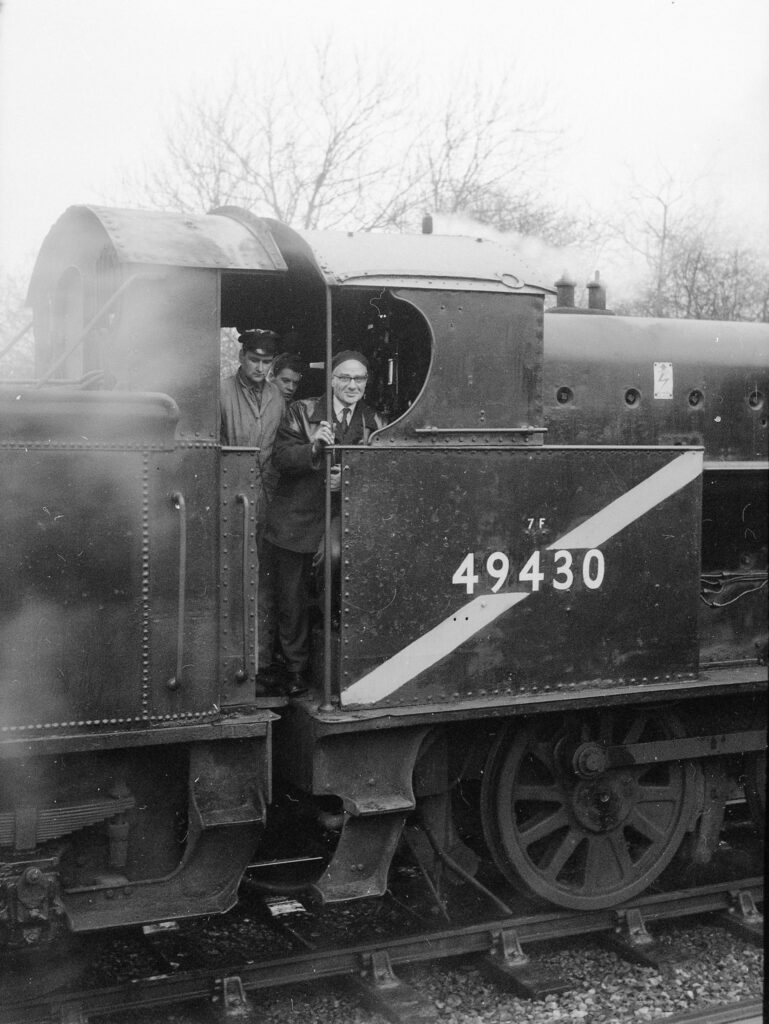
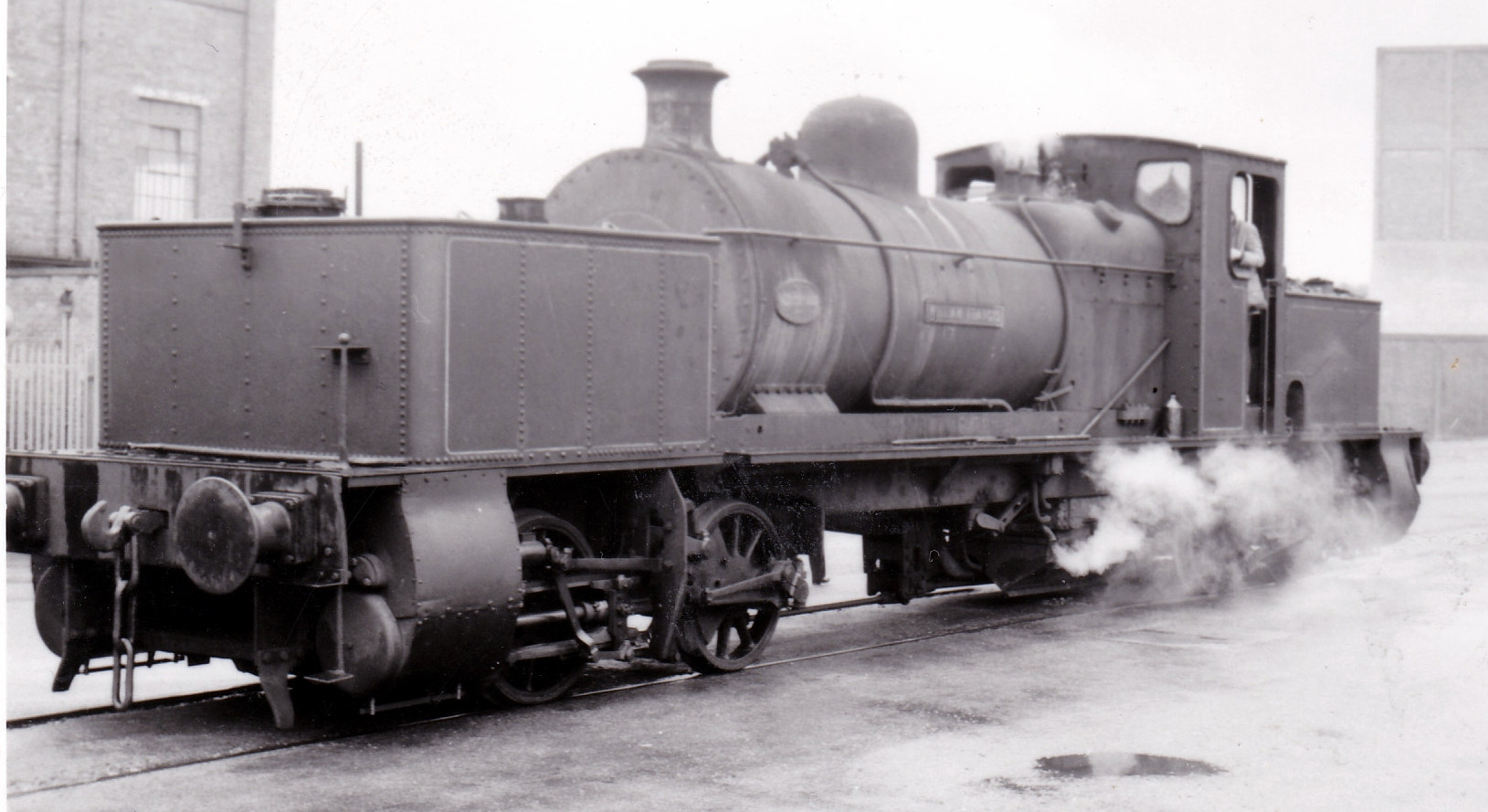
At Hall End, 49430 detached from the front of the train and attached to the rear for the final leg to Baddesley Colliery, Atherstone. The colliery was the home of William Francis, the sole survivor of four 0-4-0+0-4-0 Beyer Garratt locomotives built by Beyer Peacock, Manchester, for industrial use in the UK. However, by December 1964, William Francis, better known by enthusiasts as Little Willie, was getting long in the tooth and struggling with Baddesley’s notorious inclines.
Still top and tailed, the tour returned to Hall End where 49361 detached from what was now the rear of the train and coupled to 49430.
The return journey to Bescot was via Kingsbury Junction, Whitacre, Water Orton, Landor Street Junction, St Andrews Junction, Camp Hill, Selly Oak, Birmingham New Street, and Perry Barr North.
The tour, operating under the headcode 1Z65 was scheduled to depart Bescot at 1000 hrs, arriving at Hall End at 1313 hrs. The timings slipped a bit though a two minute instead of an 11-minute stop at Aldridge put 1Z65 back on schedule.
At Hall End 49430 quickly ran round the train. By 1325 hrs and with 49430 secured to the rear the tour set off on time for the 20-minute run to Baddesley Colliery.
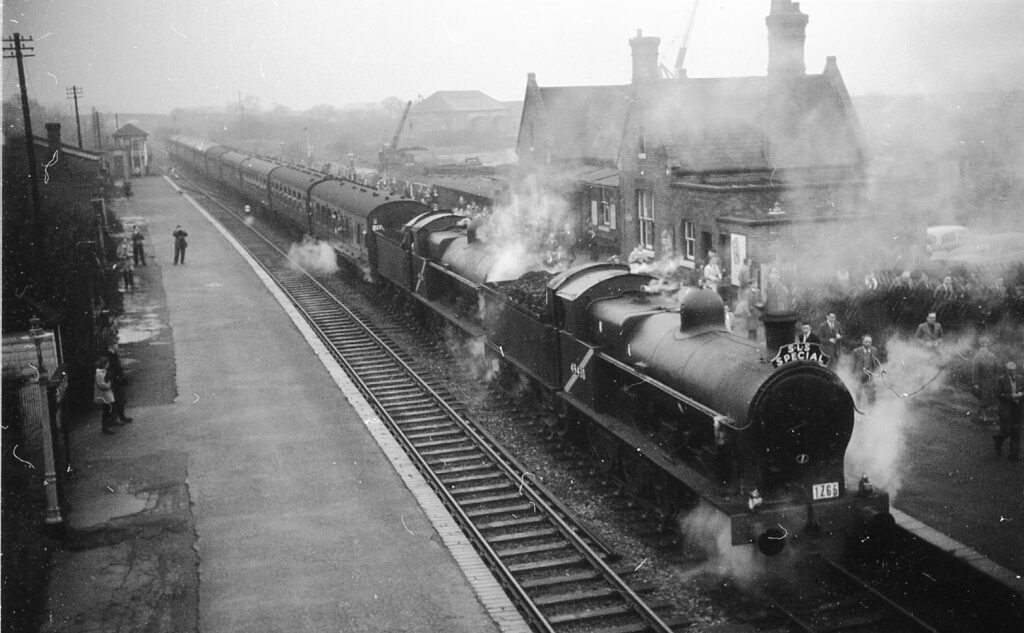
just two. (Copyright Clive Hardy).
The visit wasn’t long as at 1400 hrs the train was heading back to Hall End arriving six minutes early. With the run round of 49361 completed, the 1Z65 headed for home at 1424 hrs, six minutes ahead of schedule.
The time 1Z65 arrived back at Bescot isn’t recorded. It was scheduled for 1625 hrs but was 15-minutes late at Lifford Station Junction, and 17-minutes late arriving at Birmingham New Street.
Though they were not officially withdrawn by BR until week ending 26 December, it is rumoured that immediately after the tour, 49361 and 49430 went directly to Cashmore’s at Great Bridge for scrapping.
Designed by Francis Webb, 49361 was originally built for the LNWR as a class B 4-cylinder compound. The loco was completed at Crewe Works during September 1903 and given the running number 1289. During 1921 the 1289 was rebuilt. The high pressure outside cylinders were removed and the loco was redesignated as a class G1. Renumbered 9361 by the LMS, the loco was rebuilt to a class G2A during 1938.
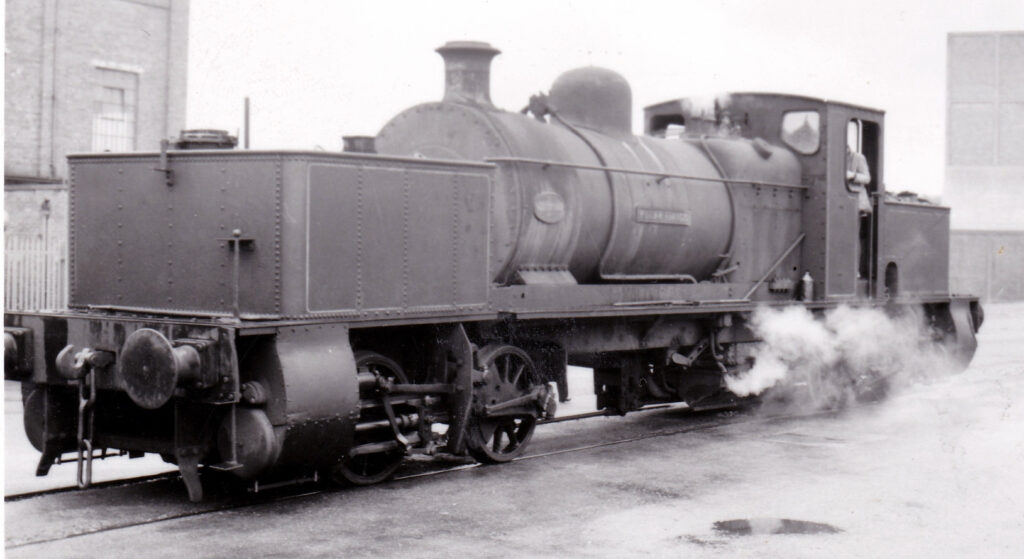
Little Willie had earned its keep hauling wagon loads of coal over the 1 in 47 and 1 in 23 gradients as the colliery line rose nearly 240 ft in under two miles to its connection with the national network on the West Coast Main Line. (Copyright Clive Hardy).
During December 1963, the loco moved Crewe South where along with 49407 she was fitted with a snow plough and kept readily available for ploughing duty if required. 49361 was reallocated to Bescot during week ending 22 February 1964.
At the time of withdrawal from BR 49361 had given 61 years 3 months and 25 days service.
On withdrawal 49430 had given 42 years 5 months and 26 days service. Designed by Hewitt Beames who was appointed the LNWR’s Chief Mechanical Engineer in November 1920, this loco was built as a class G2 at Crewe Works during July 1922 and given the running number 2226. Renumbered 9430 by the LMS and subsequently 49430 by BR.
49430 was reallocated to Bescot from Stafford during week ending 17 September 1960.

Clive is our Transport and Railway writer, with years of experience he is a fount of knowledge on all things transport nostalgia.